

Measure.Operate.Follow up. — Dr. Ali Mortazavi
Dentist and Oral & Maxillofacial Surgeon Tabriz
Before any surgery, the right measurements and the right scan. After it, clear follow-up and care.
Measure first, then operate.
Dr. Ali Mortazavi is a dentist and oral and maxillofacial surgeon in Tabriz. Oral and maxillofacial surgery deals with problems of the teeth, the jaws, the jaw joint and the tissues of the mouth and face: from impacted wisdom teeth and missing teeth to jaws that do not meet, joint pain and lesions in the mouth. Every operation starts with an examination and the right image. This site helps you know what you need before the visit, what an OPG and a CBCT show, and what care to expect after surgery.
More about the doctorFrom wisdom teeth to implants and jaws, in plain language.
Every problem has its own cause and course. These pages explain what the problem is, how it is investigated and how treatment generally works. Your diagnosis and treatment plan are decided by the doctor after an examination.
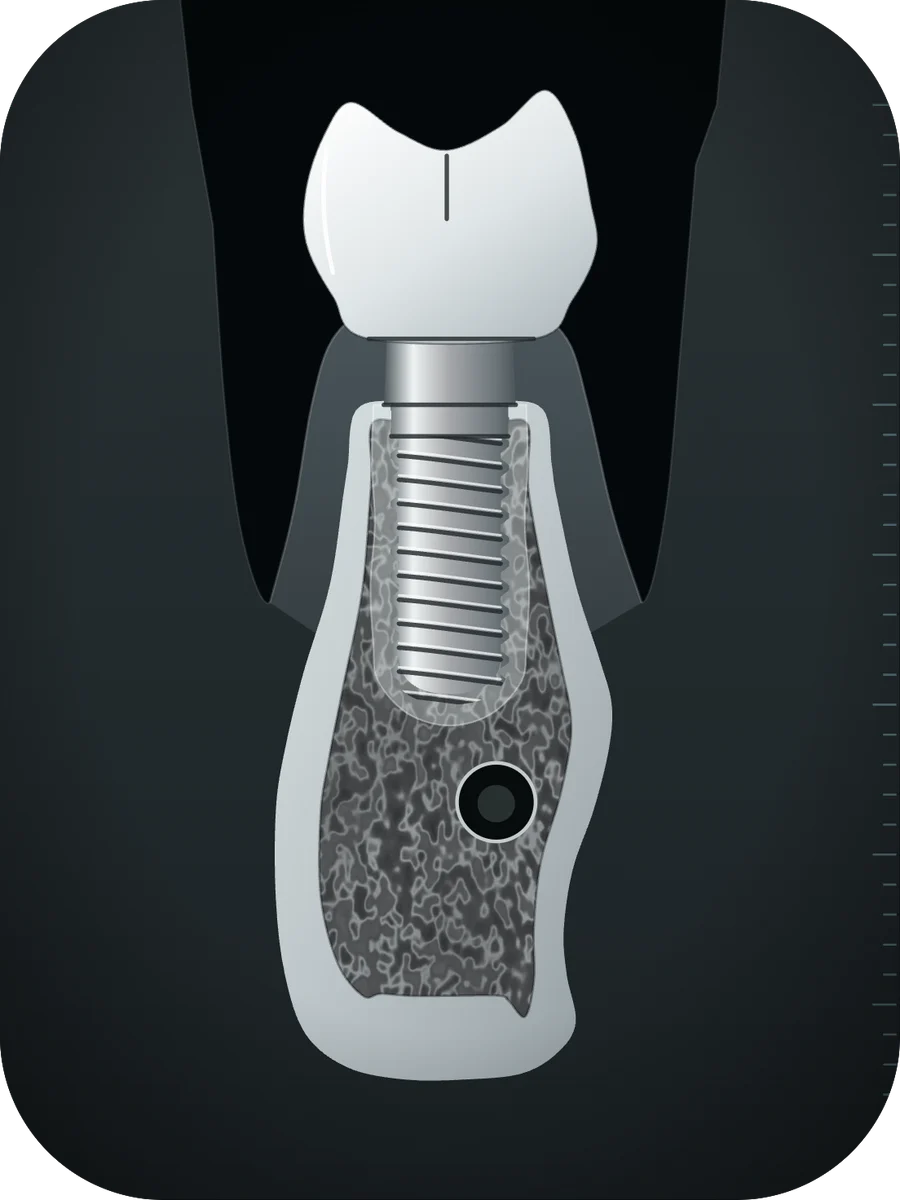
Dental implants and jaw bone reconstruction
An implant is a titanium post that sits in the jawbone in place of a tooth root and holds a crown, bridge or denture. The whole treatment usually takes several months to more than a year, and if there is not enough bone, a bone graft is needed first. This page explains the steps, the factors that matter and the complications, plainly and without exaggeration.
Read moreImpacted wisdom teeth and mouth surgery
Wisdom teeth usually come through between seventeen and twenty-five, and if there is no room they get stuck under the gum or bone. Not every impacted wisdom tooth needs to come out, but if it causes pain, infection, decay or a cyst, removal is suggested. This page explains in simple terms why teeth are removed, the steps, the recovery period and the complications.
Read moreJaw misalignment and orthognathic surgery
When the upper and lower jaws do not line up and braces alone cannot correct the bite, jaw surgery combined with orthodontics may be considered. It is a long path: braces before the operation, surgery under general anesthesia, and braces afterward. This page honestly explains the reasons, steps, recovery and risks.
Read moreThe jaw joint and facial pain
Jaw pain, joint noises and a mouth that does not open fully often come from a jaw joint disorder. Most of these problems are temporary and improve with simple care, and reliable sources treat surgery as the last step. This page covers the signs, checks, conservative treatments and warning signs.
Read moreJaw and mouth cysts and lesions, jaw and facial fractures
Most jaw cysts and tumors are benign and slow-growing, and they are often found by chance on a dental X-ray. A mouth ulcer or lump that does not heal should be examined and sometimes needs a biopsy. A broken jaw or facial bone after an injury is an emergency. This page explains the checks, treatment and warning signs for both.
Read more
From hearing your concern to follow-up after surgery
Before any surgery, your concern and your medicines come first. Then the examination and the right scan, and the plan is settled with your informed consent. At each step you know what comes next.
- Step 1 of 5.
Hearing your concern and reviewing your medicines
You are asked about what troubles you, your medical conditions and the medicines you take. Bring your referral letter and any earlier images.
- Step 2 of 5.
Examining the mouth, teeth and jaw
The mouth, the teeth and the way the jaw moves are examined, which shows what imaging is needed.
- Step 3 of 5.
The right image: OPG or CBCT
Depending on the problem, a panoramic film (OPG) or a cone-beam CT (CBCT) is taken. It shows the bone and the course of the nerve, and it is the basis of the plan.
- Step 4 of 5.
Treatment plan and informed consent
The options, the benefits, the possible risks and the timing are explained in plain words. The decision is yours, and you can ask anything.
- Step 5 of 5.
Surgery and follow-up
After surgery you receive clear care instructions, and at later visits you review how healing is going together.
You are not alone on this path.
Treatment is more than visits and surgery. Imaging, tests, medicines and follow-up are all part of it. The support team coordinates these so that you and your family spend less time chasing them.
Imaging and ultrasound
OPG, CBCT, CT, MRI and specialist ultrasound arranged by the support team, with reports sent directly to the treating doctor.
Laboratory and pathology
The support team arranges the appointment, the sampling and the follow-up of test results.
Pharmacy and specialty medicines
Help getting specialty medicines, with quick delivery for Tabriz residents.
Fast referral to specialists
If you need another doctor, the support team books the appointment and refers you.
Rehabilitation and wellbeing
The support team books appointments and refers you to rehabilitation and health specialists.
Treatment and rehabilitation at home
When getting out is hard, part of treatment and rehabilitation comes to you.
Services marked "Free" on the support form are provided at no cost.
What is worrying you?
Tap what you are facing to reach the matching explanation. This list is not a diagnosis; it only takes you to the right page.
- A wisdom tooth that hurts
- A missing tooth
- Swelling after an extraction
- Jaw joint pain or clicking
- A mouth that will not open fully
- A jaw that sits forward or back
- A sore in the mouth that will not heal
- A blow to the face
- Blood thinners before surgery
Difficulty breathing or swallowing, swelling that reaches the floor of the mouth, the neck or the eye, heavy bleeding that does not stop with pressure, and a blow to the face or head with reduced alertness, double vision, severe headache or repeated vomiting are emergencies: call 115. Tell your surgeon the same day about fever with swelling that keeps growing. When should I call right away?
Simple answers to the first questions.
Does my wisdom tooth have to come out?
Not always. A wisdom tooth that is healthy, fully through and easy to clean usually does not need to be removed, but it should be seen at regular check-ups. If it is impacted and has caused pain, infection around the tooth, a cyst or damage to the next tooth, removal is usually considered. The decision rests on the examination and the image.
Is surgery done under local anesthetic or general? Does it hurt?
Most oral surgery is done under local anesthetic, sometimes with sedation or general anesthesia. The type depends on the operation, your condition and where it is done, and it is discussed at the visit. Some pain and discomfort after surgery is normal and is usually manageable with the painkiller your doctor advises.
How many days does the swelling last after surgery?
Swelling usually grows over the first two or three days and then settles gradually. Swelling that increases after a few days, or comes with fever or severe pain, should be reported to the surgeon the same day. If breathing or swallowing becomes hard or the swelling reaches the floor of the mouth or the neck, do not wait for the surgeon: call 115.
What should I eat after surgery?
Usually soft food, lukewarm or cold; chewing on the other side; avoiding hot, hard and small-grained food; and not using a straw. The surgeon gives the exact instructions after the operation; the full list is in the patient guide.
What should I do about my blood thinner?
Do not stop it or reduce it yourself. Tell the surgeon the name of every medicine you take before surgery, from blood thinners and blood pressure and diabetes medicines to bone medicines, so that they can decide together with your own doctor.
Do I have enough bone for an implant?
The examination and an image show it. An OPG gives an overview, and a CBCT is often needed to measure the width of the bone and the distance to the nerve. If bone is low, a bone graft is sometimes needed before or together with the implant, and sometimes there is another option. It cannot be said from a description over the phone.
What should I bring to the first visit?
Previous images (OPG or CBCT, as files or on a disc), a list of your medicines with the daily use, your medical history and allergies, and your dentist's referral letter if you have one. If you do not have something, come anyway.
Can surgery damage a nerve?
In some operations, such as a lower wisdom tooth, an implant near the nerve canal or lower jaw surgery, numbness of the lip, chin or tongue can happen. It usually improves with time, but it sometimes lasts. That is why an image is taken before surgery and the surgeon checks where the nerve runs. If your lip or tongue is still numb after the anesthetic has worn off, tell the surgeon soon.
When should I call right away?
Difficulty breathing or swallowing, swelling that reaches the floor of the mouth, the neck or the eye, heavy bleeding that does not stop with pressure, and a blow to the face or head with reduced alertness, double vision, severe headache or repeated vomiting are emergencies: call 115. Tell your surgeon the same day about fever with swelling that keeps growing. The full list is in the patient guide.
Do you work with insurance?
The list of contracted insurers will be announced soon.
Do you offer online follow-up?
Details for this section will be announced once the doctor approves them.
The answers are general and do not replace a doctor's opinion on your situation.
The first step, a calm conversation.
Go to the booking page or talk to support. Either way, we are with you.
Support number